Conditionly
A loan processor runs 25 files at once, and one missing document delays a closing. I turned spreadsheets and email threads into one accountable queue.
FinTech · mortgage operations
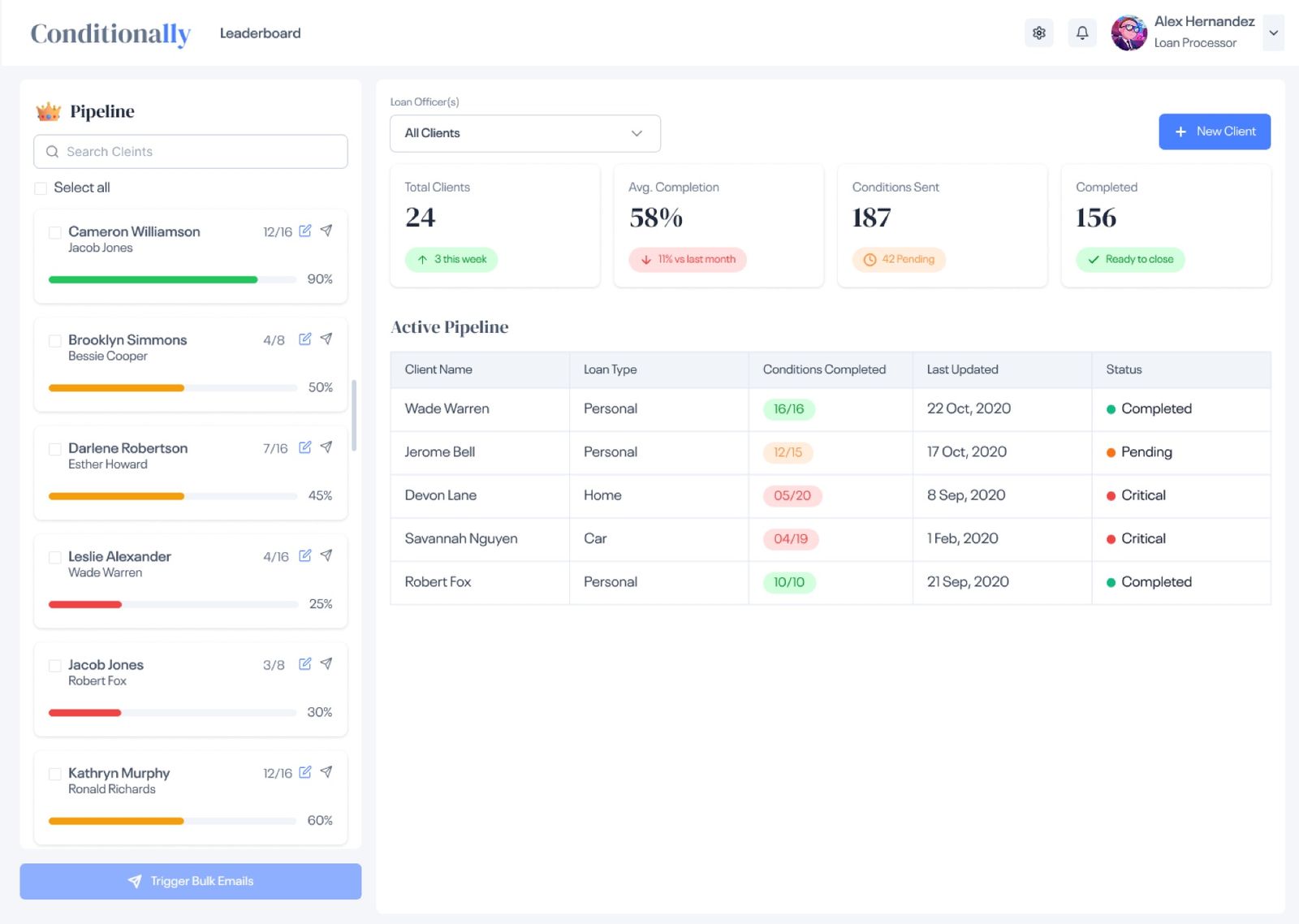
One screen for the whole book of work. 24 active clients, 187 conditions sent, 42 still pending — and every file's completion state visible without opening anything. This replaced a spreadsheet per client.
Twenty-five files, all held in someone's head
Processors collect every document before a loan reaches underwriting, and one missing condition holds up the closing. They run 15 to 30 clients at once, on spreadsheets and email.
Never a checklist problem. How do you give someone running 25 parallel processes clarity, without one more thing to remember?
Three changes that did the work
Bulk follow-ups instead of 25 emails
Chasing documents was 25 near-identical emails a day. Reminders became triggers fired across the pipeline at once.
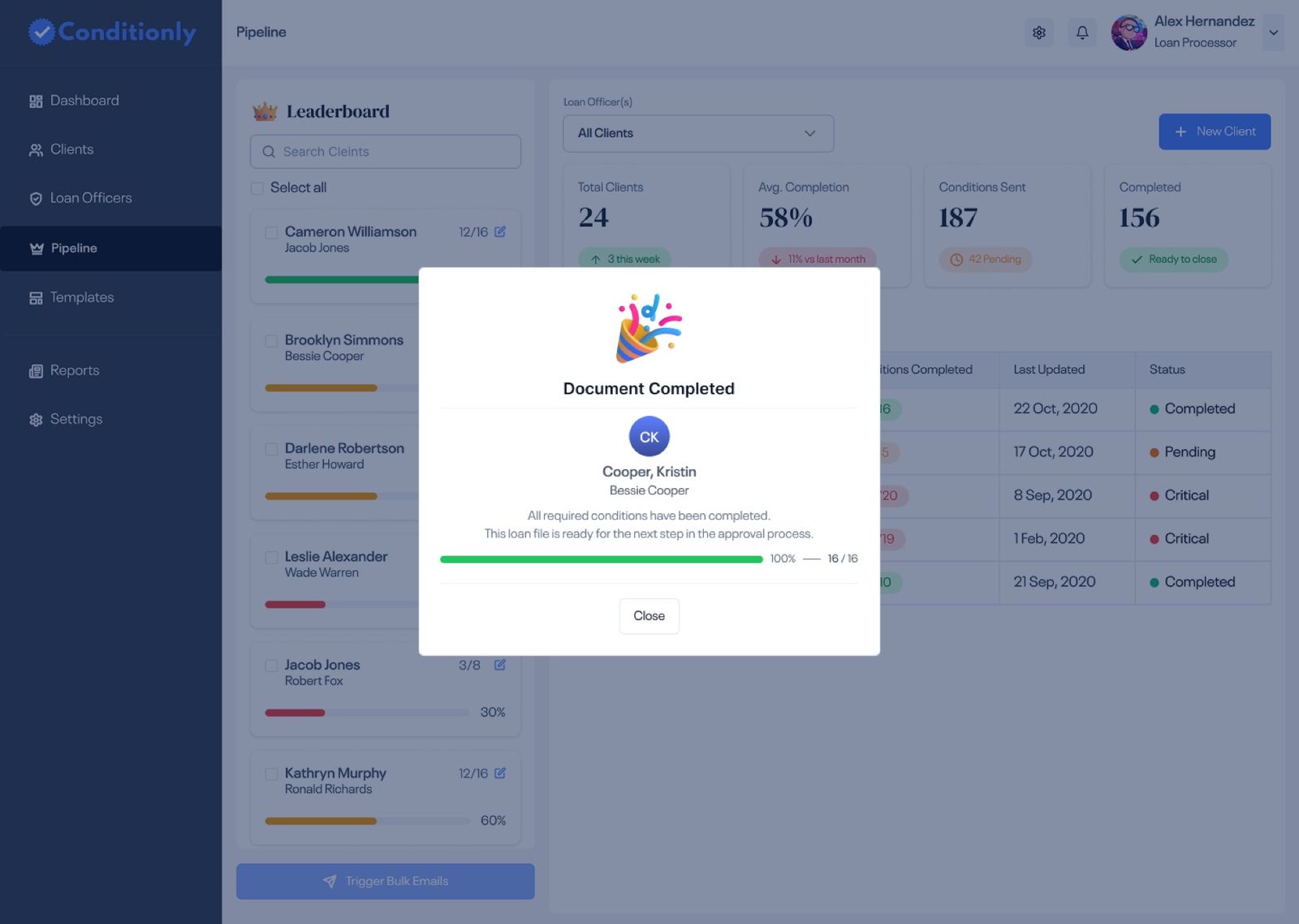
Conditions as state, not a list you re-read
Pending and Completed are two sides of one record, with progress on the file. Nobody reads a checklist to see where things stand.
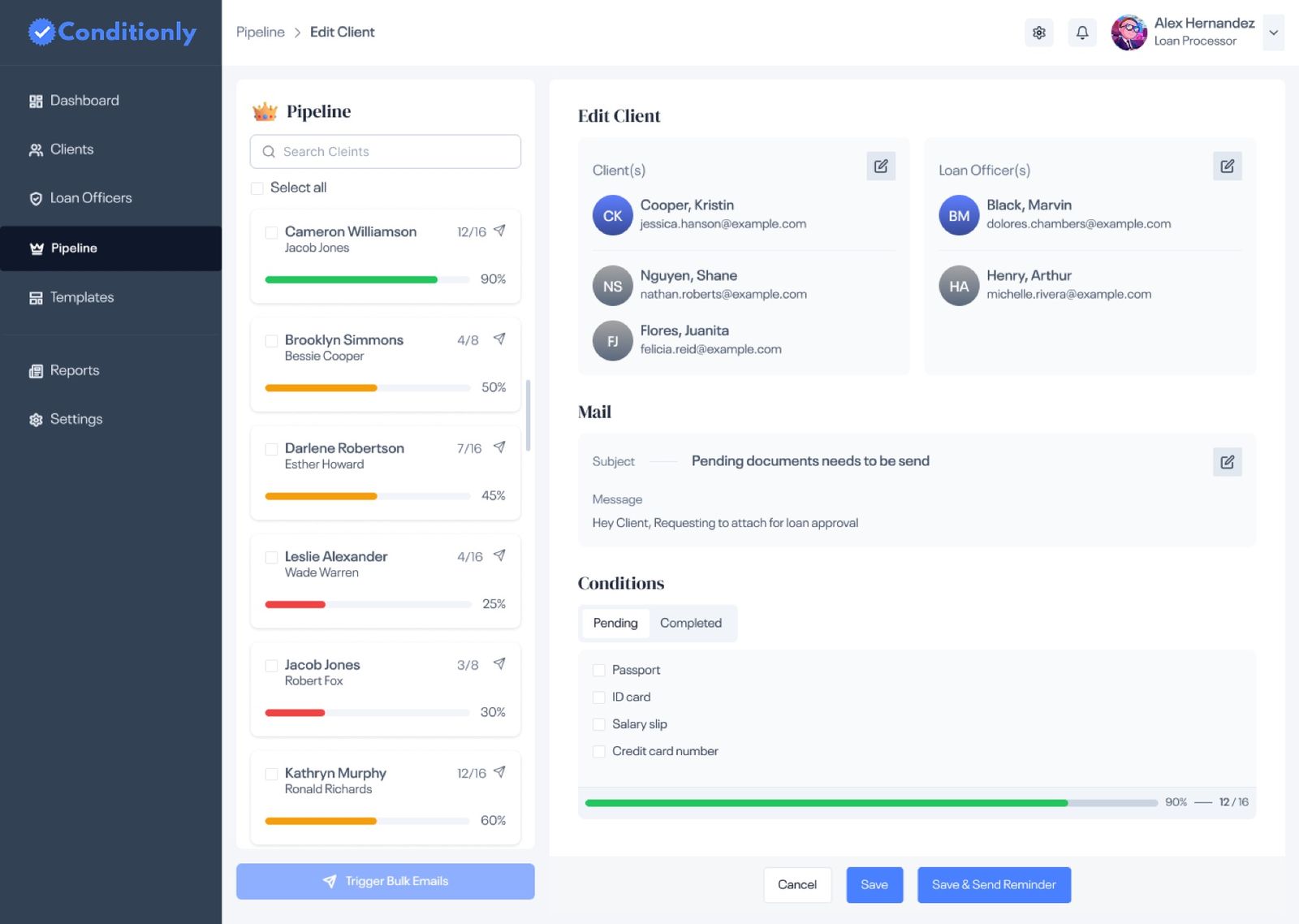
Relationships stored where the work happens
Co-borrowers and co-officers sit on the file, captured at intake, not in email.
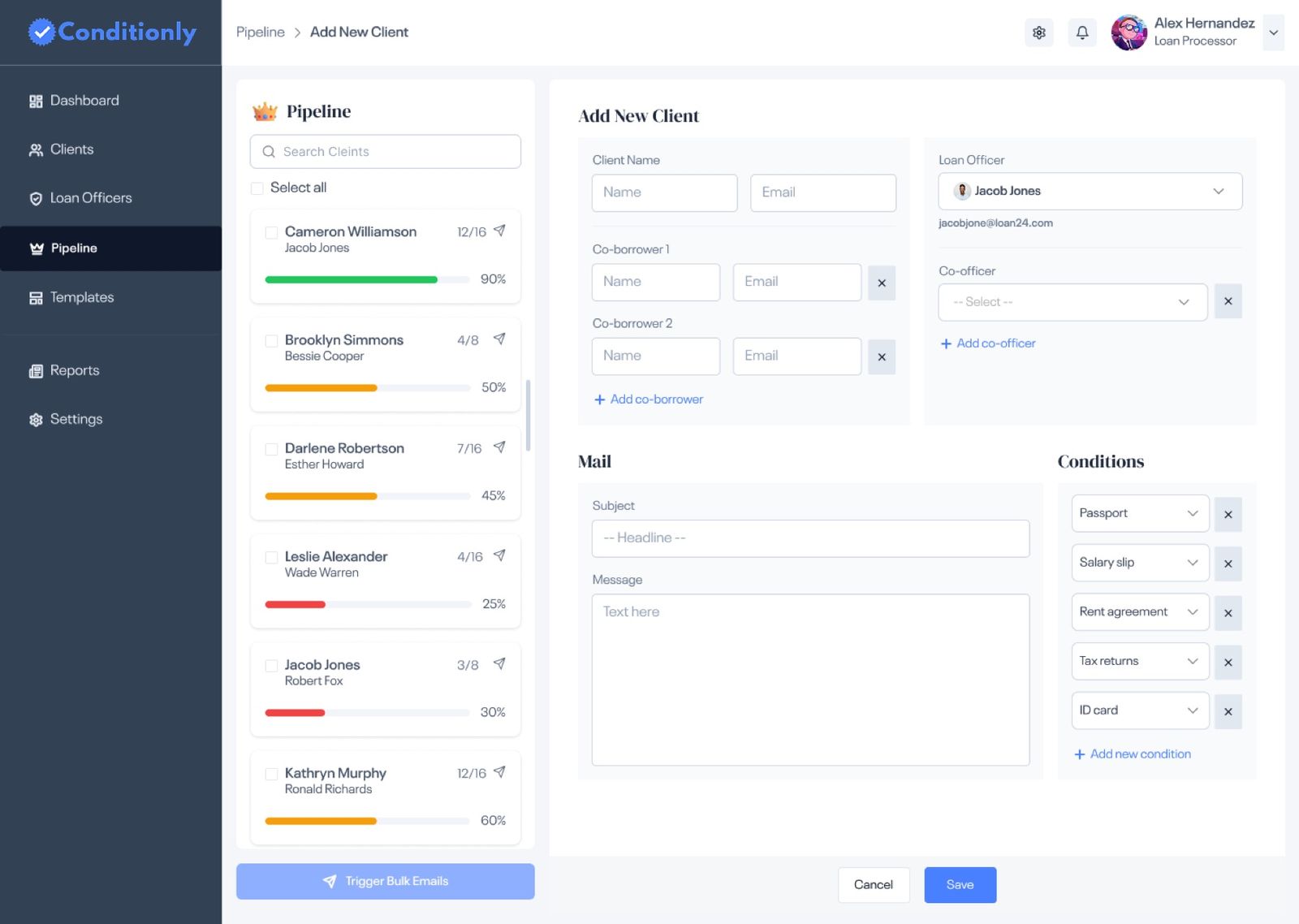
About 40% less time chasing
The client reported roughly a 40% reduction in follow-up time, mostly from bulk triggers replacing per-client emails. Client-reported, not instrumented — directional, not measured.
The clearer win is structural: conditions moved out of memory and into state. A processor sees what's outstanding across 25 files without reading one.
All borrower names, officers and figures here are demo data.
Want the reasoning behind each decision, and what I turned down?